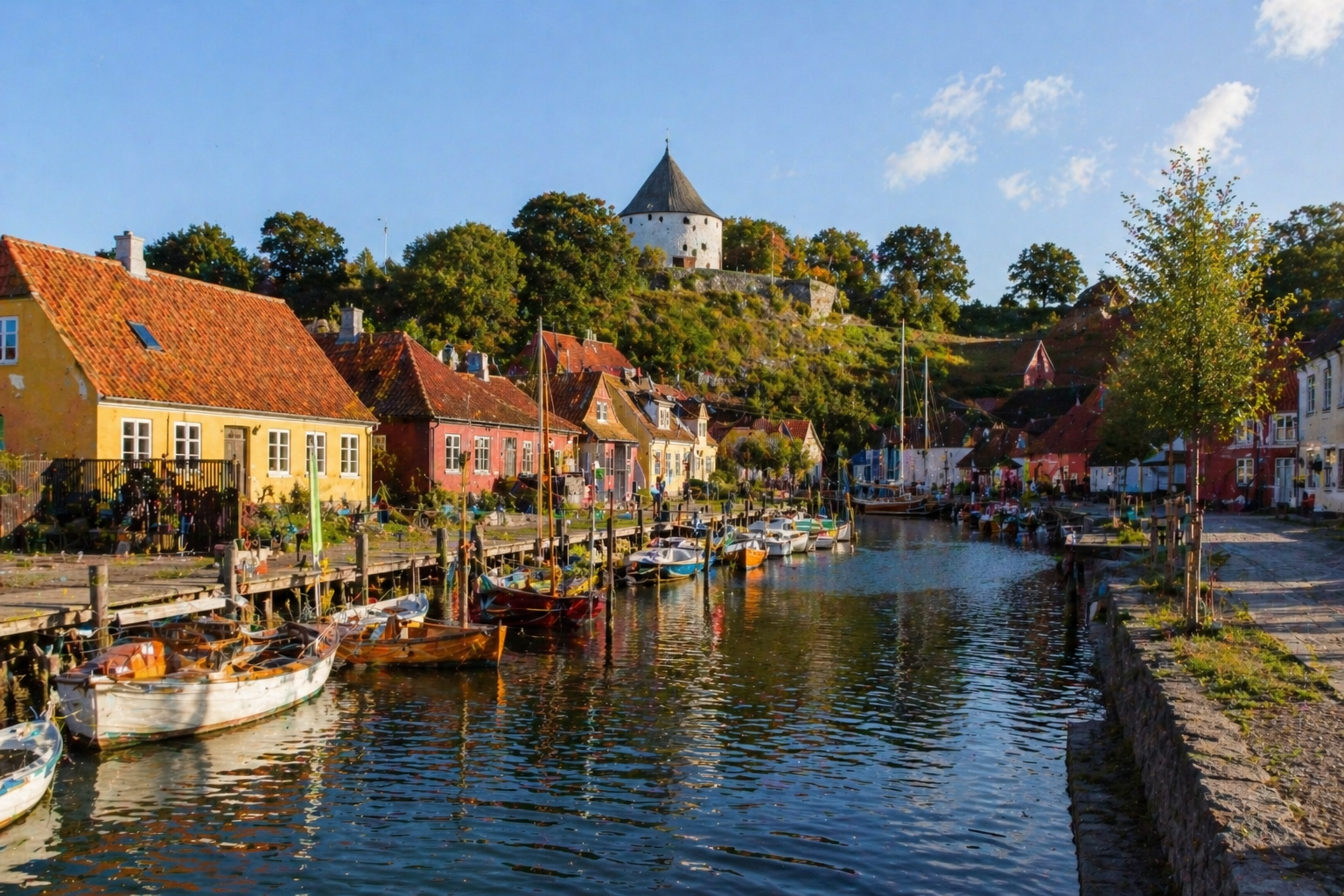
Places to Visit in Denmark Beyond Copenhagen(Hidden Gems)
 Overfinite ·
 Denmark draws millions of visitors each year, and most of them spend the bulk of their time in Copenhagen. That’s understandable — the capital is genuinely brilliant. But limiting a Danish trip to one city means missing the places that locals actually rave about. The best places to visit in Denmark stretch far beyond the capital, from wind-sculpted peninsulas and medieval market towns to sun-soaked Baltic islands and chalk-white coastal cliffs.
Denmark recorded 65.2 million total overnight stays in 2024, with international visitors accounting for just over half — yet the vast majority of that traffic flows through Copenhagen and a handful of well-known coastal resorts. The country’s lesser-known destinations remain genuinely uncrowded by European standards.
Whether it’s a first visit or a return trip with more time, the country rewards those who venture past the obvious.
Aarhus: Denmark’s Second City With a First-Rate Culture Scene
Aarhus sits on the eastern coast of Jutland and has spent decades quietly building one of Scandinavia’s most compelling cultural identities. It’s compact enough to explore on foot, yet dense enough in quality that two or three days still feels rushed.
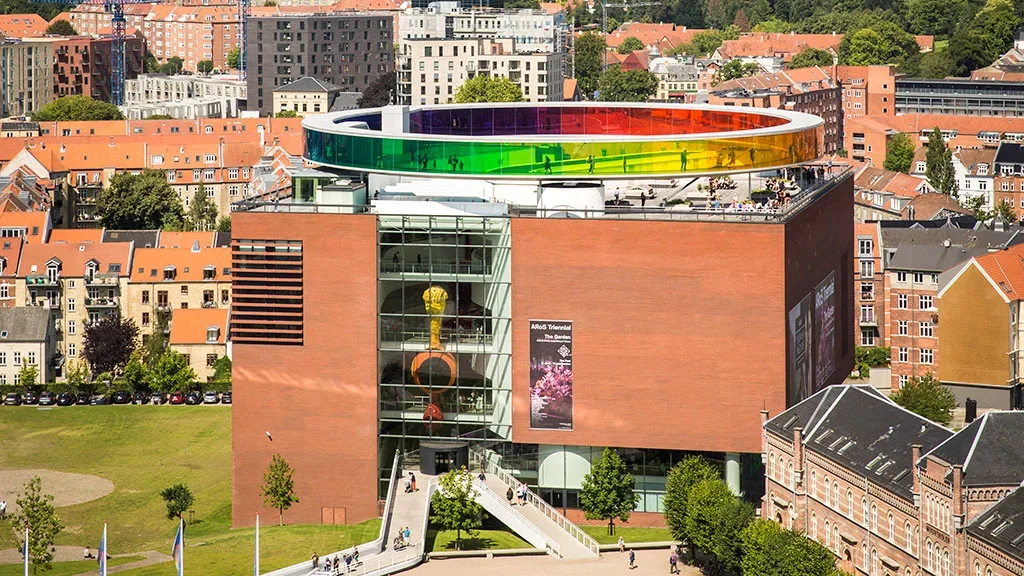
ARoS Art Museum and the Rainbow Panorama
The ARoS Aarhus Art Museum is the anchor of the city’s cultural scene. Its rooftop installation — a circular walkway of colored glass that shifts from red to violet as you move through it — has become one of Denmark’s most photographed spots. The view of the city below, filtered through layers of color, is the kind of thing that doesn’t fully translate to a photo.
Below the rainbow, the permanent collection runs from Danish Golden Age paintings to large-scale contemporary installations. The contrast works surprisingly well.
Den Gamle By: Living History Without the Stuffiness
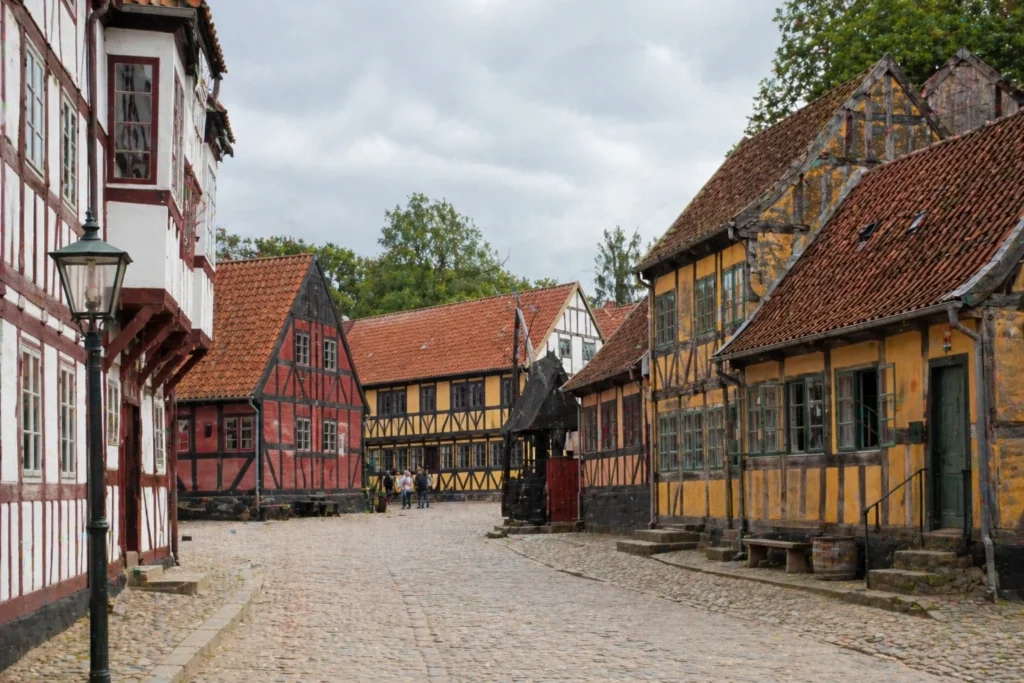
Den Gamle By (The Old Town) is an open-air museum, but it’s nothing like the static, roped-off variety. Actors in period costume go about their daily routines across reconstructed streets spanning several centuries. There’s a working bakery, a functioning post office from the 1970s, and a general store stocked with mid-century goods. It manages to feel immersive rather than theatrical — a rare balance.
Aarhus also serves as a useful base for exploring the broader Jutland region. Day trips worth considering:
- Moesgård Museum — Viking and prehistoric exhibits set inside a striking grass-roofed building south of the city
- Ebeltoft — a small coastal town with cobblestone streets and a well-preserved frigate museum on the harbor
- Lake District (Søhøjlandet) — Denmark’s closest equivalent to hill country, with walking trails through beech forest and heath
If you’re mapping out a Jutland road trip that covers multiple stops, an AI travel planner can help string the route together without the usual tab-juggling of manual research.
Skagen: Where Two Seas Meet at Denmark’s Northern Tip
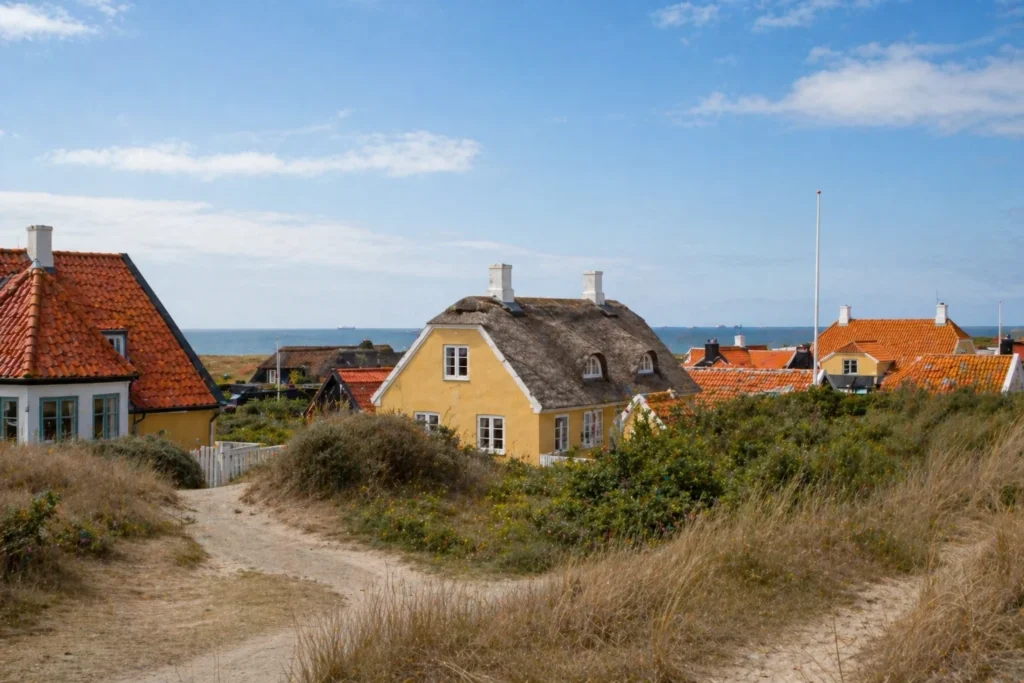
Skagen occupies the very tip of Jutland, a narrow strip of sand where the North Sea and the Kattegat collide in open water. The collision is visible from the beach at Grenen — two distinct currents meeting in churning waves just offshore. Standing at that point, with water on both sides, is one of those travel moments that feels almost theatrical in the best way.
The town itself has a long history as an artists’ colony. The Skagen Painters — a group of Scandinavian artists who worked here in the late 19th century — were drawn by the quality of the light, which is exceptionally clear and golden due to the thin peninsula’s proximity to open water on three sides. The Skagens Museum holds the largest collection of their work and is worth a morning even for those who don’t normally seek out art museums.
The Buried Church of Tilsandede Kirke
Just outside town, a church steeple protrudes from a sand dune. The rest of the building is buried — consumed over centuries by shifting dunes that the Danish state eventually gave up trying to manage. It’s a quietly eerie sight, and one of the more unusual good places to visit in Denmark’s northern region.
Bornholm: Denmark’s Sunniest Island
Bornholm sits in the Baltic Sea, closer to Sweden and Poland than to the Danish mainland, and it operates by its own rhythms. The island gets more sunshine hours than anywhere else in Denmark — statistically around 1,800 hours per year — which partly explains why it became a hotspot for ceramic artists, glassblowers, and smoke-cured food producers.
| Feature | Detail |
| Location | Baltic Sea, ~150 km east of Copenhagen |
| Getting there | Ferry from Køge or flight from Copenhagen |
| Best season | May–September |
| Known for | Smoked herring, ceramics, round churches, coastal trails |
| Key town | Rønne (main port), Gudhjem, Svaneke |
Hammershus: Europe’s Largest Castle Ruin
At the island’s northern tip, Hammershus rises from the granite cliffs above the sea. It’s the largest castle ruin in northern Europe, and the setting — dramatic rock formations, crashing waves below — does most of the atmospheric work. Admission is free, and the surrounding trails through the Hammeren headland make for a proper half-day out.
Round Churches and Smoked Fish
Bornholm’s four round churches are peculiar and worth tracking down. Built in the 12th century, they were designed with thick walls and narrow windows — partly for defense, partly to serve as watchtowers. The interiors are whitewashed and spare, and the geometry of a round church is genuinely strange to stand inside.
The island’s smoked herring, sold directly from the smokehouses in Gudhjem and Hasle, is the kind of food that resets expectations. Simple, briny, and deeply savory — it’s best eaten on a piece of dark rye with a sliced egg and chives, sitting somewhere with a view of the harbor.
Møns Klint: White Chalk Cliffs Over the Baltic
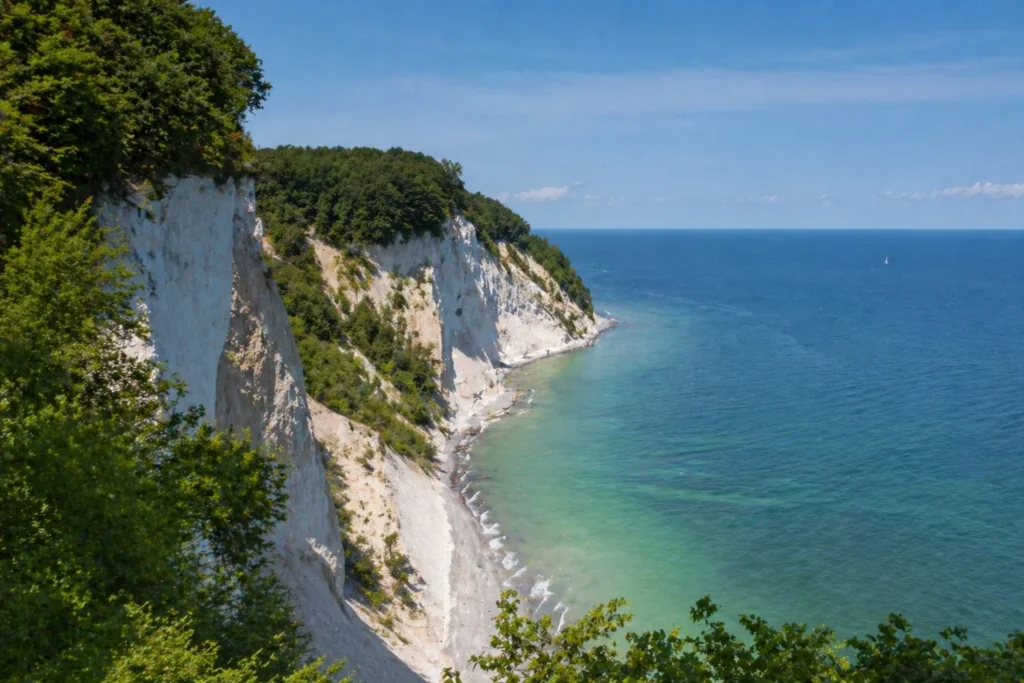
On the southeastern island of Møn, the chalk cliffs of Møns Klint drop more than 120 meters to the sea below. The white rock face, streaked with flint, runs for several kilometers along the coastline and is best seen from below — reached via a winding staircase and boardwalk down the cliffside.
The cliffs contain fossils from the Cretaceous period, and the beach below is open for searching. It’s not uncommon to find belemnites, sea urchins, and the occasional shark tooth embedded in the chalk fragments that have fallen from the cliff face.
The surrounding forest trail at the top is one of the most scenic cool places to visit in Denmark if you’re traveling in late spring, when the beech trees are still a vivid, almost luminous green. The GeoCenter Møns Klint (operated by the local municipality) provides geological context and interactive exhibits — particularly good for those traveling with children.
Møn pairs well with a few other nearby stops on the same drive south from Copenhagen:
- Liselund Park — a romantic landscaped garden with a thatched manor house, just a short walk from the cliffs
- Stege — Møn’s main town, with a preserved medieval gateway and good smørrebrød options for lunch
- Bogø and Nyord islands — connected by causeway, known for birdwatching in the surrounding marshes
Møn is also designated as one of Europe’s darkest sky areas, making it a reliable spot for stargazing on clear nights. The island has very little light pollution, and the Dark Sky Park facilities include telescopes and guided astronomy evenings during summer months.
Travelers who prefer to plan stays like this the same way independent travelers approach budget-friendly city trips — finding the hidden-value options locals actually use — will find the youth hostel approach used in Amsterdam translates well to Denmark’s island stays too.
Ribe: Denmark’s Oldest Town
Ribe is the oldest town in Denmark — and quite possibly the most atmospheric. The cobblestone streets, the medieval cathedral rising above the rooftops, and the absence of mass tourism create a setting that other historic towns in Europe have long since lost to souvenir shops and tour groups.
The town sits near the Wadden Sea National Park, a UNESCO-listed tidal flat system that stretches along the southwestern coast of Jutland. The park is one of the most important migratory bird habitats in northern Europe, and guided seal-watching tours operate from nearby harbors.
The Ribe Viking Centre
Just outside the old town, the Ribe Viking Centre offers a hands-on take on the Viking Age. It’s built on a site near one of the oldest Viking settlements in Denmark, and unlike many heritage attractions, the demonstrations here are run by people who take the history seriously:
- Rope-making and textile weaving — using period-accurate tools and materials
- Blacksmithing — working iron in a reconstructed forge with live fire
- Archery and combat training — open for visitors to try under supervision
- Market stalls and cooking — Viking-era food prepared and sold on site
Ribe also has a night watchman who walks the town at 10 PM each evening in season, singing traditional songs and recounting the town’s history. It’s a little theatrical, but the streets are genuinely beautiful at that hour, and it remains one of the most distinctive things to do anywhere in the country.
For those who enjoy destinations that reward research before arrival — the way knowing context changes how you read a Colombia travel advisory — Ribe is that kind of place: the more you know going in, the more you notice.
Practical Comparison: Denmark’s Top Hidden Gems
| Destination | Best For | Travel Time from Copenhagen | Entry Cost |
| Aarhus | Culture, food, city life | ~3 hrs by train | Free (most attractions paid) |
| Skagen | Coastal scenery, art, history | ~4.5 hrs by train | Free town, museums paid |
| Bornholm | Nature, food, beaches | 1 hr by plane / 5–6 hrs ferry | Ferry cost varies |
| Møns Klint | Cliffs, fossils, dark skies | ~2 hrs by car | Free cliff access |
| Ribe | History, Viking heritage, wetlands | ~3 hrs by train/car | Viking Centre paid |
Plan Your Route Before You Go
Denmark’s hidden gems are spread across a country that’s deceptively large once you move off the motorway. Aarhus is a natural hub for Jutland, Bornholm requires its own dedicated trip, and Møn and Ribe can each be paired with nearby stops for efficiency. Denmark’s travel market is projected to reach US$5.20 billion in revenue in 2025, with inbound tourism continuing to grow — which means popular summer destinations like Bornholm are booking out faster than in previous years.
For those building a multi-destination itinerary — especially if combining Denmark with a deeper dive into Tokyo’s off-the-beaten-path neighborhoods or other international destinations — mapping out the sequence and logistics early avoids the common mistake of over-scheduling.
If you want help structuring a Denmark itinerary that actually fits your travel style, get in touch with the Overfinite team — they can help build a route around the destinations that match what you’re actually looking for, not just what appears first in search results.
Frequently Asked Questions
Aarhus, Bornholm, Skagen, Møns Klint, and Ribe are the standout destinations — each offering something the capital can’t: chalk cliffs, smoked fish from working smokehouses, a buried church in a sand dune, and Viking streets unchanged since the Middle Ages.
The fastest option is a 35-minute flight from Copenhagen Airport, though the overnight ferry from Køge is a popular choice for travelers who want to bring a car or simply enjoy the crossing.
Many of the best experiences — the chalk cliffs at Møns Klint, Skagen’s beach at Grenen, Ribe’s medieval streets — cost nothing to visit, making it easier to manage costs once you’re outside the capital.
June through August offers the longest daylight hours and warmest weather, but May and early September are worth considering for fewer crowds and lower accommodation prices.
Ribe, founded around 700 AD, is recognized as Denmark’s oldest town and retains its medieval street plan, cathedral, and Viking-era heritage almost entirely intact.
Aarhus and Ribe are well-served by train from Copenhagen, but Bornholm requires a ferry or flight, and Møns Klint is most practical with a rental car.